Guiding Future Filmmakers
Designing a hub for emerging filmmakers to learn, create, and connect
COMPANY
Fourddo
ROLE
Lead Product Design Intern
YEAR
2026
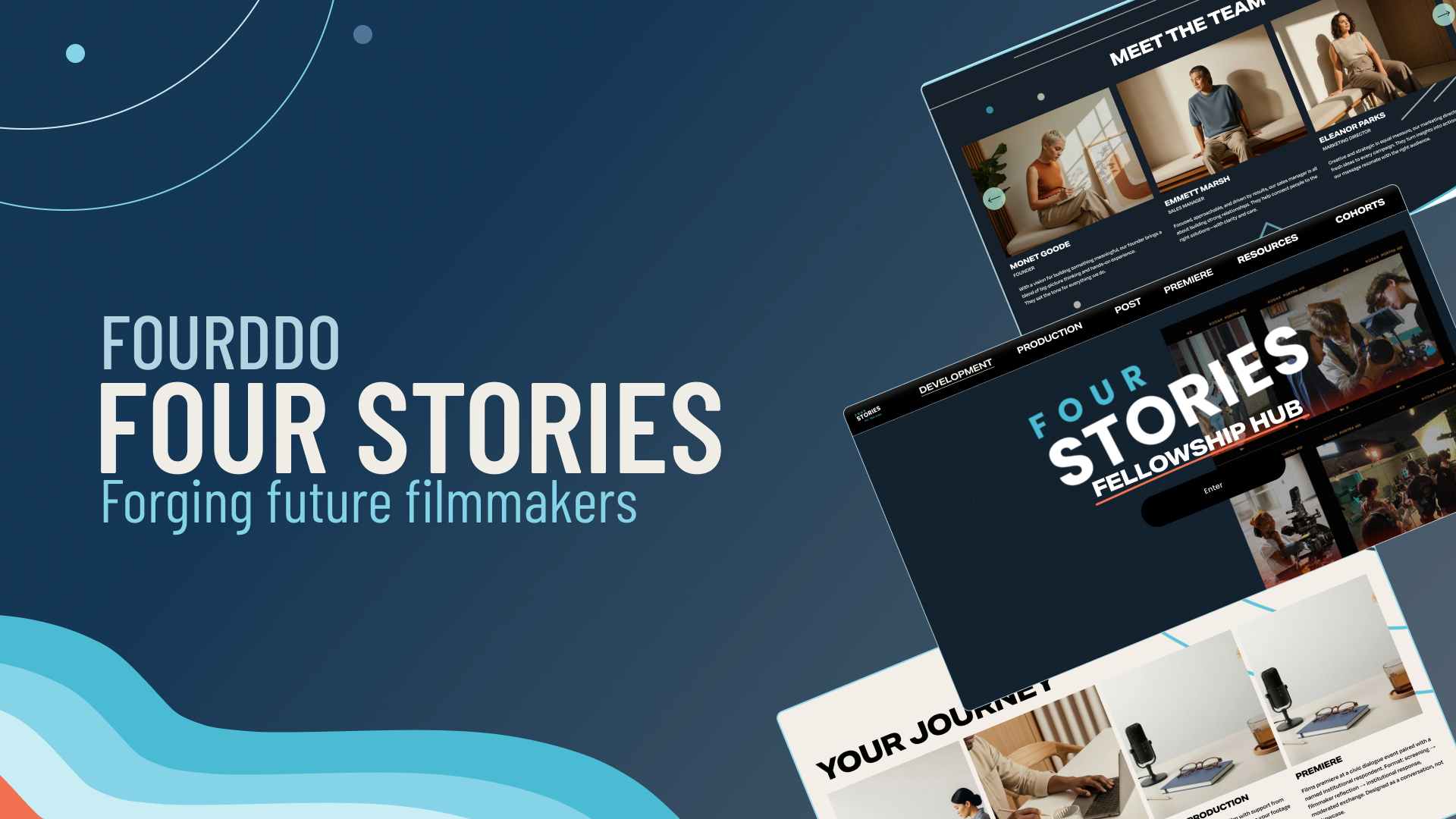
The Fellowship
Fourddo is a nonprofit dedicated to amplifying causes and initiatives that shape the lives of today's youth. This past summer, they launched Four Stories, a 10-week filmmaking fellowship in Boston pairing four emerging directors with mentors to develop, produce, and premiere original PSA films.
I was brought on as a Product Design Intern to design and build the Fellows Hub, a private digital platform serving as the cohort's central home base for curriculum, resources, and communication across the entire program.
Overview
Project Type
Internship project - Full Website Design
Problem
Four Stories had no centralized digital home for its inaugural cohort. Program information, curriculum, deliverables, and communication were scattered across emails and documents, creating friction for fellows trying to stay on top of a demanding 10-week program while also making their first film.
Solution
The Fellows Hub, a centralized digital platform built in Squarespace that brought curriculum, resources, and communication into one place for the entire cohort.
My Role
Lead Product Design Intern (User Research, Information Architecture, Wireframing, Prototyping, Visual Design)
Tools
Figma, Canva, FigJam, Google Slides, Google Meet
Process
Click a stage to jump to that part of the case study.
User Research
Research was conducted to better understand the needs of first-time fellowship participants navigating a demanding creative program.
Due to that research, key insights emerged:
No Central Home Base
Program information, curriculum, and deadlines were scattered across emails and shared documents with no single place to find what they needed.
First-Time Filmmakers
Most fellows had never produced a short film before. The platform needed to support the work without adding friction to an already demanding creative process.
Unclear Expectations
Deliverables, milestones, and payment requirements were communicated across multiple channels, making it easy to lose track of what was due and when.
The Hub Had to Earn Trust
For the platform to actually get used, it had to feel intentional and worth returning to. A cluttered or confusing experience would push fellows back to email.
A Note From the Field
“There's just a lot going on, and it's hard to keep track of where everything lives.”
Competitive Analysis
Existing fellowship and learning platforms were reviewed to understand how structured programs communicate curriculum, deadlines, and resources to participants.
Canvas
Heavy on functionality but overwhelming for first-time users. Information density without clear hierarchy creates friction before any learning begins.

Google Classroom
Familiar and accessible but visually flat. Lacks the brand presence needed to make a program feel intentional and designed.
Notion
Flexible and clean but requires too much setup from the user. Works best when someone already knows how to navigate it.
Solution
Through this research, the Fellows Hub's main goals were identified.
Clear Navigation
Instant access to the current week
Milestone Visibility
Deadlines and deliverables always in view
Structured Curriculum
Weekly content organized by phase
Low Friction Access
Private and easy to get into
Brand Cohesion
Felt like Four Stories
Using these goals as a benchmark, I set out to outline information architecture and draft low-fidelity sketches.
Prototype
With the structure mapped out, it was time to make it real. The high-fidelity prototype was developed to bring the Fellows Hub to life within the constraints of the fellowship's existing brand and platform.
Results
The Fellows Hub launched on June 12th in time for the first kickoff session. All four fellows received access and used the platform throughout the program. The practical impacts of the design quickly became clear:
Centralized Access
For the first time, fellows had a single destination for curriculum, deliverables, resources, and program communication, eliminating the friction of navigating a 10-week program through scattered emails and shared documents.
Program Clarity
A structured week-by-week layout gave fellows a clear view of where they were in the program, what was coming next, and what was expected of them at every stage of production.
Scalable Foundation
The Fellows Hub established a replicable content structure and design system that Four Stories can build on as the fellowship grows beyond its inaugural cohort.
For a first-of-its-kind program running its inaugural cohort, the hub gave Four Stories something it didn't have before: a place that held everything together. Following the fellowship, program directors noted that fellows responded positively to the hub, citing it as a meaningful part of their experience.
Improvements
Based on feedback from the team and cohort, a “meet the fellows” section was added, highlighting the fellows and their films.
Reflection
My time with Fourddo marks several firsts for me. First established brand, first real technology constraints, first time designing specifically for a defined group of users. Each one pushed me in a different direction and left me with something I carry forward.
Constraints are invitations
Balancing team requests, platform limitations, and a highly specific audience taught me to work with what I had rather than wish for what I didn't. Building inside Squarespace meant every decision had to account for what the platform could and couldn't do, which pushed me toward creative solutions rather than ideal ones.
Clarity is the design
Designing for first-time fellows meant if a fellow couldn't find what they needed in the first few seconds of logging in, the design had failed regardless of how it looked.
Stakes make better designers
This wasn't a prototype or a concept. It was a live platform that four fellows relied on throughout a demanding 10-week program. That responsibility made every decision feel more considered.
Thank you for reading!